Pricing & identification
Pokémon Card Prices: How to Find Out What Your Cards Are Worth
An old Pokémon card can look almost identical to one that sells for a very different amount. A shiny card may be inexpensive, while an ordinary-looking card can be sought after because of its printing, condition or distribution history. The trick is not to memorize hundreds of prices. It is to learn how to identify what you own and compare it with the right evidence.
The most reliable way to estimate a Pokémon card's value is to identify its exact version, assess its condition and compare several recent completed sales of equivalent cards. Free resources such as TCGplayer, PriceCharting and eBay can help. Treat their figures as estimates, not guaranteed offers or formal appraisals.
By Cash Out on Cards | Educational guide
Editorial disclosure: Cash Out on Cards is an independent Pokémon card purchasing business and may benefit if you choose to sell to us. This guide explains options you can use whether or not you contact us.
Contents
- Identify the exact card
- Learn to recognize different printings
- Compare free pricing resources
- A practical valuation walkthrough
- Condition and grading
- How to estimate an entire collection
- Why a purchase offer differs from retail value
- Key takeaways
- Frequently asked questions
Identify the exact card
Start with the card in front of you, rather than searching for the name of the Pokémon alone. A search for Charizard, for example, can return decades of releases, promotional cards, reprints, different artwork, different languages and graded examples. Most of those results will not be useful comparisons for your particular card.
Look for these clues:
| Detail | Where to look | Why it matters |
|---|---|---|
| Card name | Usually near the top | Identifies the Pokémon or other card subject |
| Collector number | Often along the bottom edge | Narrows the search to a specific numbered entry |
| Expansion symbol or set code | Location varies by era | Separates one expansion from another |
| Edition stamp | On relevant releases, near the illustration or elsewhere | Helps distinguish particular printings |
| Foil treatment | Artwork, background or other parts of the face | Separates standard, holo and parallel versions |
| Language | Printed text and language code, where present | Prevents comparing different regional markets |
| Copyright and illustrator | Commonly near the bottom | Supporting clues to the design and era |
On many cards, the collector number looks like 21/102. The first number identifies the entry and the second usually relates to the set's numbering system. Promo cards and special rarities may use other formats. A number above the printed set total can indicate an additional numbered rarity; it does not by itself prove a card is scarce or valuable.
Do not confuse the card number with the Pokémon's Pokédex number. A Pokémon can appear in multiple sets with completely different collector numbers. Also, do not assume that every design has a set symbol: original English Base Set cards are a well-known exception.
The official Pokémon card database is a useful starting point for matching artwork and printed details, especially for supported releases. For early cards or unusual variants that are not represented there, consult a specialist catalog such as Bulbapedia's expansion list and compare multiple photographs. A correct match is more important than getting a quick price.
Learn to recognize different printings
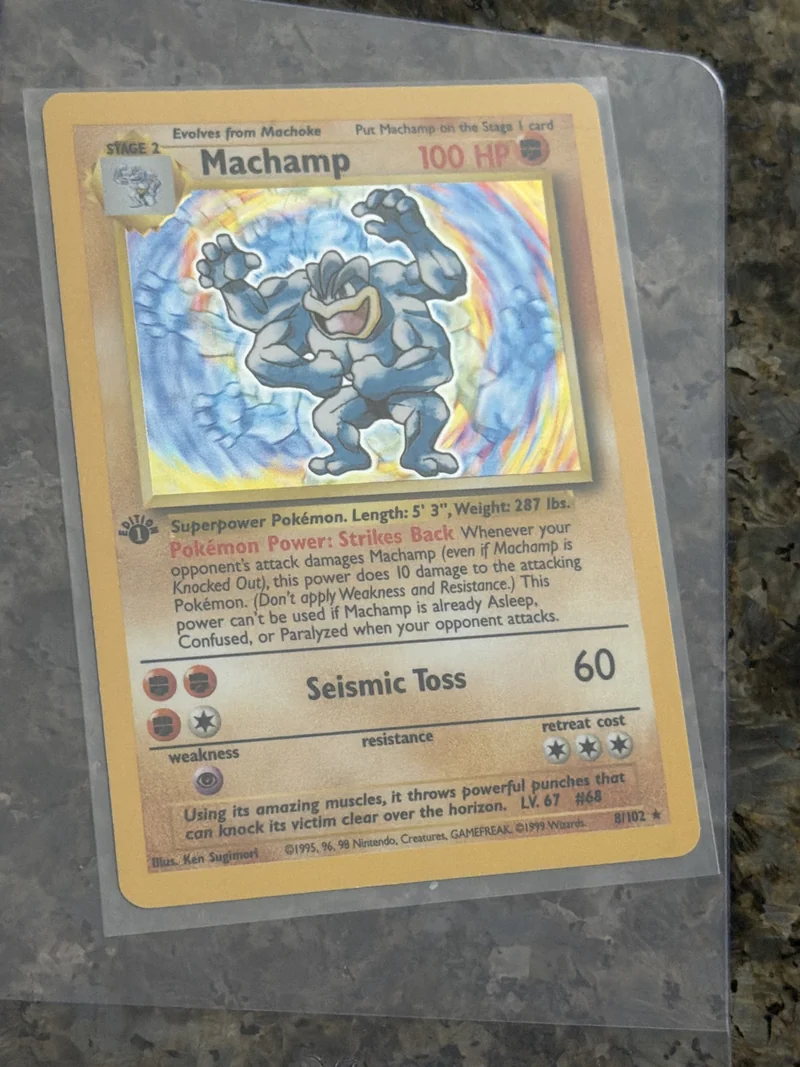
English Base Set cards illustrate why two seemingly similar cards can have different market values. Early First Edition and unstamped Shadowless printings are distinguished from the familiar shadowed Unlimited design. The shadow refers to the printed border effect beside the illustration, not a physical shadow cast by your camera or card sleeve. See our guide to rare and valuable cards for details and an important Machamp exception.
| Version or characteristic | What to check |
|---|---|
| First Edition | The edition mark and the design details appropriate to that particular set |
| Shadowless | Absence of the printed artwork-frame shadow on relevant early Base Set cards |
| Unlimited | The later conventional shadowed Base Set design, generally without an edition stamp; exceptions exist |
| Holofoil | Reflective treatment, often in the illustration window on older cards |
| Reverse holo | A parallel reflective treatment that often affects areas outside the illustration; design varies by set |
| Standard non-foil | The corresponding version without a foil treatment |
| Reprint | Set, numbering, special marks, design and release details, not simply the same artwork |
Tilt a card gently under diffuse light to see its surface. Do not scratch or bend it to check whether it is shiny. More recent card layouts use different foil treatments, and some have textures that cannot be identified reliably from a straight-on photograph.
English and Japanese cards also need to be researched separately. A Japanese printing may be released earlier, have different artwork or belong to a different set, but none of those characteristics guarantees it will command a higher price. The relevant market and exact version determine the comparison.
A copyright year is another useful clue, but it is not the same as a verified release date. A card can use an older design or copyright line in a later product. Our vintage collection guide explains the early English-language eras and how to research them without guessing from the year alone.
Compare free pricing resources
Different pricing services answer different questions. Use them together, not interchangeably.
| Resource | Best use | Important limitation |
|---|---|---|
| TCGplayer | Researching cataloged singles, especially raw trading cards and recent marketplace activity | Market Price is derived from sales on that marketplace; match the version, finish and condition |
| PriceCharting | Looking up historical prices for identified cards, including different grade categories | Algorithmic estimates can combine imperfectly described sales; inspect individual records |
| eBay Product Research | Finding comparable completed transactions and accepted-offer prices | Access may require signing into seller tools; listings and titles still require verification |
| PSA CardFacts and auction records | Researching graded examples, certification categories and auction history | Recorded transactions are not exhaustive, and a graded price does not describe a raw card |
| Heritage auction archives | Researching documented high-end sales and unusual items | Specialist auction prices may include buyer premiums and can reflect exceptional examples |
TCGplayer's Market Price draws from completed recent transactions, rather than merely averaging current offers from sellers. Its pricing terminology guide explains other displayed prices. PriceCharting uses historical sales and a proprietary estimation method; its reported ungraded price is not a condition-specific promise for your card. For eBay, look at sold listings rather than simply completed listings, which may include items that did not sell. Product Research is particularly useful because it can reveal the actual accepted price of a Best Offer transaction.
When comparing prices, use the same currency, examine shipping charges consistently and note the sale date. Avoid listings that combine several cards, include unrelated products or use stock images that do not match the description. If a result appears implausibly high or low, inspect the actual listing rather than taking its headline price at face value.
An asking price is what a seller hopes to receive. A completed sale is evidence that a buyer and seller reached a transaction at a given time. Neither alone proves what you will receive. If there are only one or two credible recent comparable sales, describe the estimate as uncertain instead of pretending the average is precise.
A practical valuation walkthrough
Consider the English Electrode card shown in the photograph. Its visible collector number is 21/102, its printed copyright line includes 1999 Wizards, and the illustration frame has a printed shadow. No First Edition stamp is visible. Its design is consistent with the familiar English Base Set Unlimited non-holographic Electrode. The Electrode catalog entry provides a reference for comparing the artwork. A photograph of the front is not enough to authenticate the card or assess its final condition.
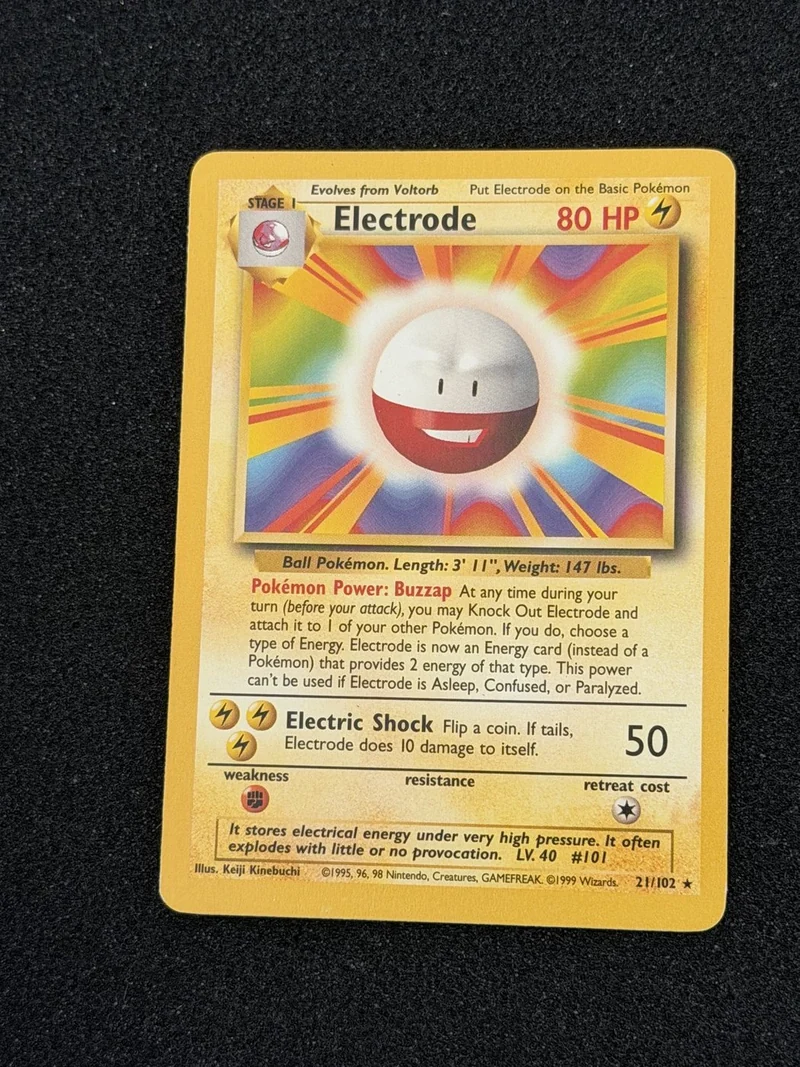
Here is how to research a card like this:
- Write down the name and collector number: Electrode 21/102.
- Match the artwork, set, language and printing. Search for
Electrode 21/102 Base Set Unlimited Englishrather thanElectrode Pokémon cardalone. - Determine whether the card is raw (not professionally graded) or graded, and check the surface and back if safe to do so.
- Find several relevant sales or a condition-matched guide entry. Reject a Shadowless or professionally graded example if yours is neither.
- Note the date, condition, item price and any shipping adjustment for each comparable. Use a reasonable range rather than a single attractive price.
The following numbers are an invented teaching example, not observed Electrode prices or an appraisal. Imagine five credible, similarly conditioned raw cards with comparable transaction prices of $8, $9, $10, $11 and $12. The middle result is $10. A listing asking $50 does not change those five transactions. If a sixth sale at $40 appears, investigate the difference before incorporating it. Perhaps it included a rare variant, multiple cards or an unusual premium. If not, it is still only one observation.
For a practical worksheet, record the exact identity, condition, source, date and estimated low/high range. A range is often more honest than a figure such as $10.37 when the evidence is thin. The same method works for a modern card, a vintage promo or a professionally graded card, with appropriately matched examples.
Condition and grading
A raw card is one that has not been encapsulated and assigned a grade by a professional grading company. Raw does not mean damaged, and a card stored in a sleeve is not automatically Near Mint. Examine both sides in soft light; small dents, scratches and edge whitening can be difficult to see through binder sleeves.
TCGplayer distinguishes Near Mint, Lightly Played, Moderately Played, Heavily Played and Damaged under its conditioning guide. These are marketplace categories, not numerical PSA grades. Use the published standard of the marketplace on which you intend to sell. When a flaw is uncertain, disclose it rather than choosing the most favorable description.
Graded cards carry a certification label from a third-party service such as PSA, CGC or Beckett. For a graded comparison, match the grader, grade, card variation and any designation on the label. A PSA 10 result should not be used as the expected sale price for a raw card that looks clean.
Grading also introduces costs and uncertainty. Suppose a raw card could sell for $80. In a hypothetical scenario, grading and shipping cost $35, and the resulting graded card sells for $110. After grading expenses, the amount is $75 before selling costs. The higher gross price did not make grading worthwhile in that example. A different grade or a more valuable card could produce a different outcome. Check current service fees, shipping, estimated turnaround and comparable graded sales before committing.
Do not clean or alter a card to try to improve its grade. A professional assessment may identify changes, and cleaning can damage the original surface. For a deeper explanation of grade premiums and rarity, see what makes a Pokémon card valuable.
How to estimate an entire collection
A collection of 500 cards is not simply 500 opportunities to receive the highest visible listing price. Many cards sell infrequently. Some are best grouped together, and others warrant individual research. Treat a collection as a mix of assets with different demand and selling costs.
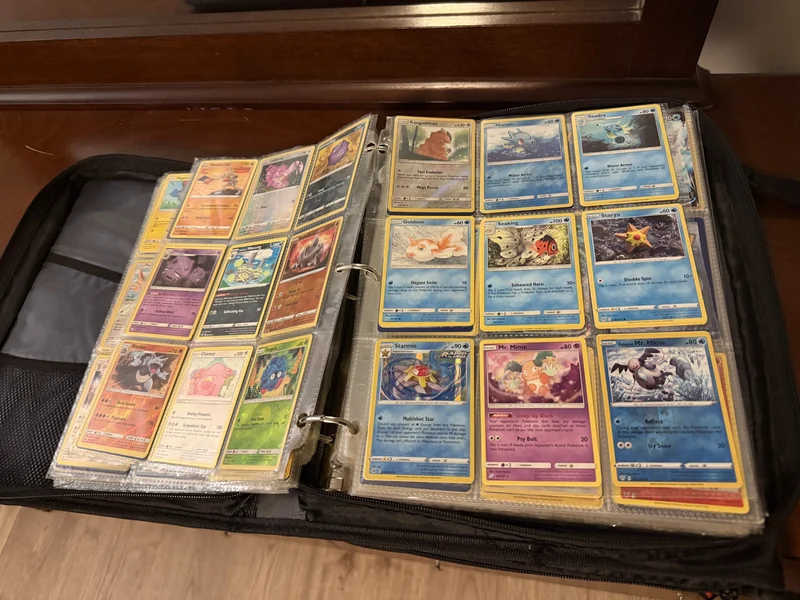
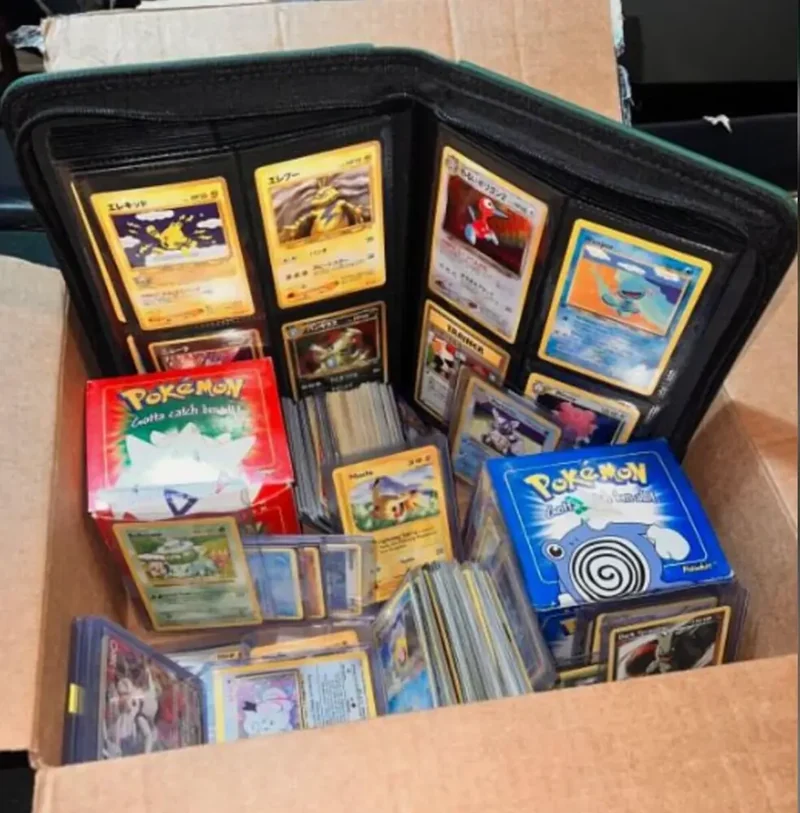
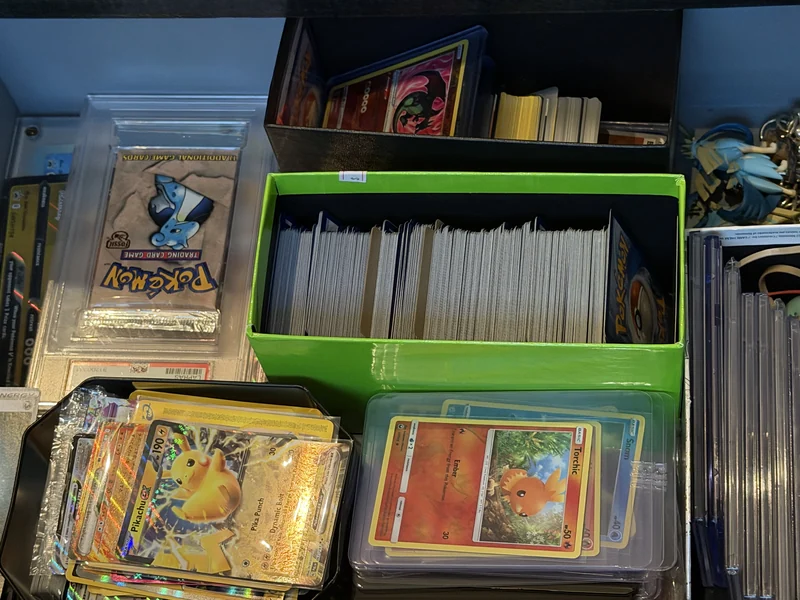
If you want to do your own research, begin with a few representative photographs of the boxes and binder pages. Record sealed products and slabs separately. Identify cards that look unusual, older foil cards, early edition marks and well-preserved cards. Research the most promising cards individually, but do not assume that everything else is worthless. A vintage ordinary card or a modern playable card can merit a closer look.
For large groups of lower-priced cards, look for comparable lots of similar size and contents. Do not multiply the best single-card price in the group by the number of cards you own. Quantities, duplicates and condition matter. If you already have a spreadsheet, add a column for the source and date of each estimate; an old spreadsheet may reflect prices that have since changed.
You may discover that you enjoy researching and want to list some cards yourself. You may also decide the time involved outweighs the likely benefit. If you would rather skip individual research, submit collection photographs or send an existing inventory for a free, no-obligation purchase review. You do not need to build a spreadsheet specifically for us.
Why a purchase offer differs from retail value
Retail value is a reasonable estimate of what individual cards might sell for to end buyers. A direct collection offer is what a purchaser is prepared to pay for the group, considering the specific cards and the transaction. The two are not the same measure.
A purchaser who takes a collection as a lot assumes inventory risk, time spent identifying and processing cards, future resale costs, condition uncertainty, shipping expenses and the possibility that some cards will take a long time to sell. The purchaser may also choose to keep some cards rather than resell them immediately. A direct purchase offer will often be below the estimated combined retail proceeds.
That does not make every discounted offer fair, nor does it mean individual selling is always better. Compare the total amount you expect to retain after expenses with the convenience of an agreed whole-collection price. If a collector quotes a price for an exceptional single card, you can also seek an independent opinion before deciding whether to include it in a larger sale.
Our selling options guide compares individual listings, card shops, auctions, consignment and direct buyers. For the reasons prices change over time, read our Pokémon card market guide.
Key takeaways
- Exact identity, condition and completed comparable sales are more useful than the highest asking price.
- A pricing guide estimates a market; it does not guarantee a sale or a purchase offer.
- Match raw cards with raw cards and graded cards with the same grader and grade.
- Estimate collections realistically, including low-liquidity cards and selling costs.
- You can consider a collection sale without valuing every single card first.
Frequently asked questions
How can I check Pokémon card prices for free?
Search the exact card number, set and version on TCGplayer and PriceCharting. Compare recent sold listings on eBay and use auction records for unusual graded cards. No paid appraisal is needed for an initial research estimate.
Is there a free Pokémon card value checker?
Several third-party price guides and card-identification tools provide free pricing information. Verify any automated identification against the actual card before relying on its estimate. Cash Out on Cards offers a manual purchase review, not an instant value-checking calculator.
Are all holographic cards valuable?
No. Foil treatment is one feature. Demand, the specific printing, condition and the supply of comparable copies matter too.
Why do websites show different values for the same card?
They may use different transaction sources, time periods, condition categories or pricing methods. They may also be showing an asking price rather than an estimate derived from sales. Make sure the versions match.
Should I grade my cards before selling them?
Only if the possible benefit justifies grading, shipping and other costs, the uncertainty of the result and the wait. Many cards are perfectly suitable for sale raw.
Can I sell Pokémon cards if I do not know their value?
Yes. You can seek a purchase offer based on photographs or an existing list. You may also obtain independent estimates for especially valuable items. An initial review does not require you to accept any offer.
Do old Pokémon cards with damage have value?
Some do, particularly when collectors seek the particular version. Damage generally reduces the pool of buyers and the comparable price. Look for sales in similar condition rather than applying mint-card prices.
Ready to show us what you have?
Don't want to spend hours checking individual card prices? Show us your collection for a free, no-obligation purchase review. No sorting or pricing research is required. Payment and shipping arrangements are discussed individually before any purchase is agreed.
Sources and further reading
- Pokémon Support — using the trading card database
- Bulbapedia — English expansion catalog and Electrode 21/102 (specialist references)
- TCGplayer — Market Price, price definitions and card conditioning overview
- PriceCharting — pricing methodology
- eBay — Product Research
- PSA — CardFacts, First Edition Charizard example
- Heritage Auctions — archived Shadowless Charizard example